


The affiliate of Hyundai Motor Co. plans to complete development of its first software-defined vehicle by the end of 2027, it said Thursday in its 2030 strategy. The car will have Level 2 driving automation capability that allows it to operate on highways, with Kia planning to launch a more advanced version capable of operating on regular roads in early 2029.
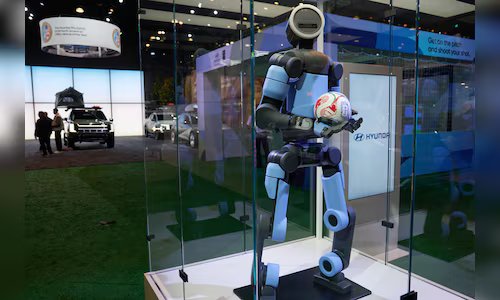
Meanwhile, Kia also said it will deploy the Atlas robot, developed by Hyundai’s Boston Dynamics unit, at its Georgia facility in 2029. Initially, the robot will take on simple manufacturing tasks to improve safety and productivity, before using AI learning to expand into higher-value processes.
Carmakers are increasingly looking to software — in-car infotainment, advanced-driving assistance and over-the-air updates to improve performance — as well as manufacturing efficiency to help them weather an uncertain consumer outlook, particularly for electric cars.
Software-defined vehicles are a rapidly growing part of the auto market. The sector is worth around $250 billion to $300 billion, with the potential to exceed $1 trillion over the next decade, KPMG wrote in a report in February, citing industry estimates.
For Kia, the SDV transition will allow the company to generate continuous revenue throughout a vehicle’s lifespan via software subscriptions, significantly increasing per-unit profitability and lowering repair-related costs, said Samsung Securities Co. analyst Esther Yim.
Kia will invest more than $500 million to strengthen its physical AI capabilities and vision-language-action models, as well as deepen strategic partnerships with technology companies like Google’s DeepMind and Nvidia Corp.
The carmaker’s technology push is part of a broader recalibration of its sales outlook, as Kia joins other major brands in shifting their EV plans.
Kia cut its annual EV sales target to 1 million units by 2030, from the goal of 1.26 million it set last year. It will expand its hybrid lineup to 13 models, with an aim to sell 1.1 million units by 2030 — a slight increase on its previous estimate of 1.07 million.
The carmaker’s total global sales target is now 4.13 million units, down from the 4.19 million it previously projected. It’s looking to sell 1 million units in the US and 1.5 million in emerging markets, including a heavy focus on India.