

The platform has been developed by the Department of Telecommunications (DoT) in collaboration with the National Disaster Management Authority (NDMA).
At the core is the Integrated Alert System, SACHET, developed by Center for Development of Telematics (C-DOT), an indigenously developed platform, which is already operational across all states and Union Territories and has delivered over 134 billion SMS alerts in more than 19 Indian languages.
The system is based on the globally recognized Common Alerting Protocol (CAP), as recommended by the International Telecommunication Union.
How the new system will work
The upgrade introduces Cell Broadcast (CB) technology alongside SMS, enabling authorities to push alerts simultaneously to all mobile phones in a specific geographic area, rather than sending messages individually.
.
Unlike SMS, which can get delayed during network congestion, CB messages are transmitted directly from mobile towers to devices using a dedicated channel, allowing millions of users to receive alerts almost instantly.
The system is geo-targeted, meaning only people physically present in an affected area—such as a coastal zone during a tsunami warning—will receive the alert.
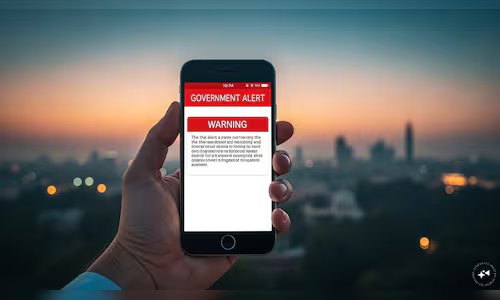
Messages are also designed to override typical notification behavior: they can appear as pop-ups on screens, may trigger a loud alert tone or vibration, and are displayed prominently until acknowledged by the user.
Because the technology is broadcast-based, it does not rely on individual phone numbers and can reach even roaming users or devices without heavy network usage.
What kind of alerts people will receive
Authorities say the system will be used for both natural and man-made emergencies, including earthquakes, tsunamis, lightning strikes and man-made hazards such as gas leaks or chemical incidents.
Alerts can include:
- Early warnings (eg severe weather or seismic activity)
- Immediate threat notifications (eg evacuation orders, hazardous leaks)
- Public safety advisories (do’s and don’ts during disasters)
- Location-specific instructions, such as evacuation routes or shelters
Messages will be delivered in multiple languages based on region and device settings.
What to expect during the May 2 test
As part of the launch exercise, test alerts will be sent to mobile phones in all state capitals, including Delhi-NCR, in English, Hindi as well as regional languages.
The government has shared the exact test message that will be sent:
“India, launches Cell Broadcast using indigenous technology, for instant disaster alerting service for its citizens. Alert citizens, safe nation. No action is required by the public upon receipt of this message. This is a test message.”
“India launches SAIL Broadcast for Rapid Disaster Alert Service for its citizens using indigenous technology. Alert Citizen, Safe Nation. No action is expected from the public on receipt of this message. This is a test message.”
These will appear as on-screen messages clearly marked as test communications.
These may show up as flash messages or pop-ups on mobile screens, depending on handset and network compatibility.
The government has urged citizens not to panic, stressing that the exercise is meant to validate the system’s ability to deliver fast, reliable alerts during real emergencies.