


Although clients continue to remain cautious on discretionary spending, he said Wipro’s deal pipeline remains healthy, with demand largely driven by cost optimization and vendor consolidation as enterprises redirect savings towards AI initiatives.
Aparna Iyer, Chief Financial Officer of Wipro, said the company is targeting a return to its aspirational EBIT margin band of 17-17.5% over time, but not at the cost of growth.
Chief Human Resources Officer Saurabh Govil said hiring will remain measured in FY27, with the company reviewing campus recruitment based on demand while relying on its existing talent pipeline.
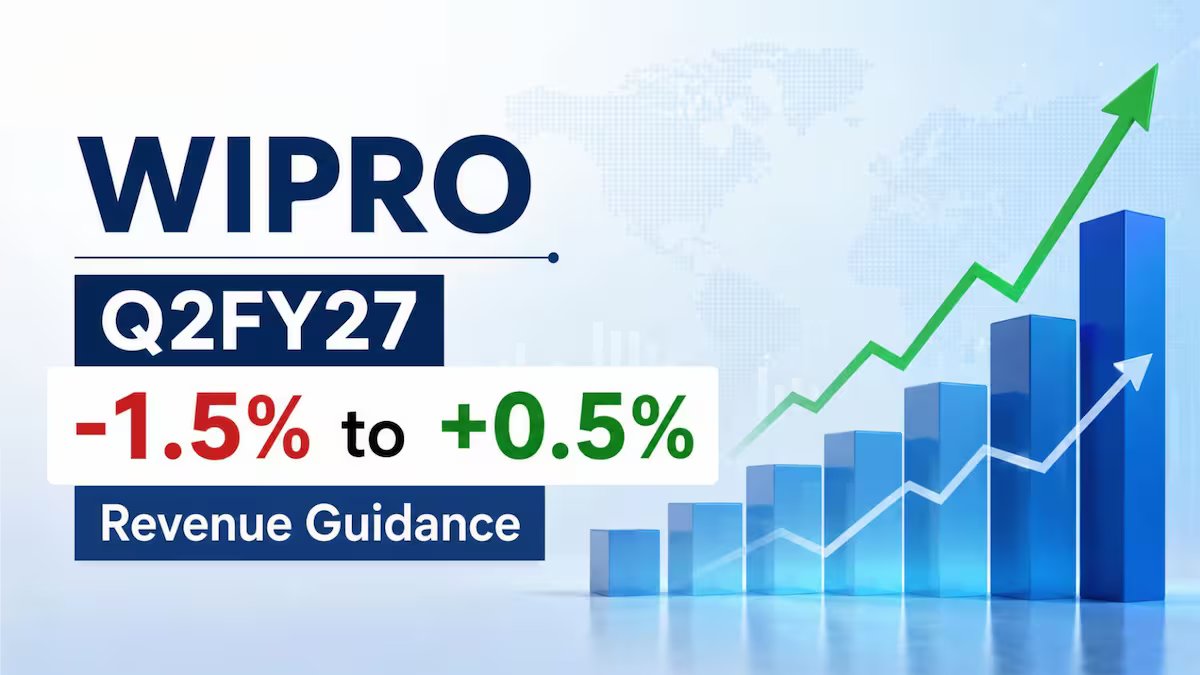
The Bengaluru-based IT services company expects its constant currency revenue to grow between -1.5% and +0.5% sequentially in the September quarter (Q2FY27).
In the April–June quarter (Q1FY27), Wipro reported revenue of $2,614.5 million, while revenue in rupee terms stood at ₹24,453 crore. The company’s EBIT margin was 16%.
This is an edited transcript of the interview.Q: Wipro’s EBIT margin fell to a 15-quarter low of 16% in quarter one. What were the key factors behind the sharp contraction, and what gives you confidence that margins will improve over the coming quarters?Iyer: We reported an EBIT margin of 16%, a contraction of 120 basis points year-on-year. There were a few factors that influenced our margin performance for the quarter.
One is certainly the salary increase that we rolled out in a weak revenue environment. Correcting our pyramid will take a little longer. Therefore, the bounce back in margins should come through both traditional and AI-specific levers over the next few quarters.
We have 55% of our revenues coming from fixed-price programs. We will drive steeper productivity-led cost takeouts. We also have acquisitions where we will drive cost synergies. In addition, we will continue working on our traditional levers, including SG&A optimization, utilization and other efficiency measures.
We remain confident about the levers available to us. How we exit the year will also depend on some of the investments we make for growth. As I have said before, the large deals we have been winning do come with lower profitability in the initial years. Some of these deals are ramping up and will continue to put some pressure on margins. However, our endeavor is to improve operational efficiency to offset that impact.
Q: But that 17% to 17.5% margin band you have spoken about in the past—does that still hold? Given the investments you are talking about, at least for FY27, does reaching that level look difficult?Iyer: That is the band we have stated, and, as you rightly said, we have comfortably stayed within it despite a weak revenue environment. There are certain investments that are both important and necessary in the current environment. That’s why we are making them.
Can we get back to that band? That remains our endeavour. It continues to be the margin range we would like to return to, but not at the cost of growth. We will continue investing for growth and aim to get back there at the appropriate time.
Palliya: I will add a few points to that. Clearly, we want to continue investing in AI because that’s the strategic pivot we have taken. You have heard about our AI-native unit, where we are building platforms and solutions.
Second, we are investing in upskilling our teams. Third, we are pursuing deals where we have to make forward-looking investment decisions.
Overall, the objective is the same as Aparna mentioned—we want to return to that margin band. We’re just not putting a specific timeline around it.
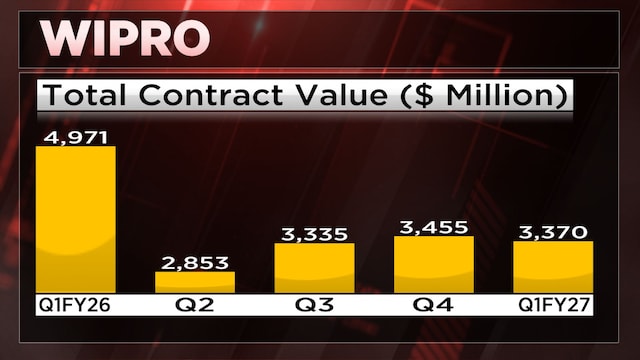 Q: How would you characterize the demand environment? Quarter one was weak with 1.2% sequential decline, and at the midpoint of your quarter two guidance, it would be another quarter of decline. What are you seeing? Has the environment worsened?Palliya: The demand environment has not changed since we spoke last quarter. Having said that, our pipeline remains healthy. A significant portion of it is driven by cost optimization and vendor consolidation. Clients are not increasing their overall technology budgets. Instead, they are taking costs out of existing operations so they can invest in AI and reimagine their business processes and technology landscape.
Given the uncertainty and the pace of AI adoption, we have guided for a -1.5% to +0.5% revenue growth range for quarter two. Our endeavor is to perform within that range, whether it’s at the upper end, the middle or the lower end. A lot will depend on how the next few months unfold. Our immediate focus is on converting the large deal wins from quarter one into revenue in quarter two. Naturally, that also depends on our clients’ implementation timelines.
Q: Do you think headcount will increase in FY27? Also, will we continue to see a higher on-site mix?Govil: If you look at the trend in headcount, excluding the employees who joined through the Mindsprint acquisition, about 3,200 colleagues joined us, but the pace has come down, reflecting the current demand environment. I don’t see headcount increasing significantly.
From a hiring standpoint, we have not started campus hiring yet. We will review that based on how the demand environment evolves.
We carried out significant hiring in the last quarter of the previous financial year, so we believe we have adequate talent supply for now.
Q: Aparna, just to close the loop from where we started on margins, do you think margins will remain lower for longer given the current environment?Iyer: As I have shared, we would like to return to our aspirational EBIT margin band of 17% to 17.5%. That’s the range we have consistently spoken about, and that’s where we would like to be. I don’t want to characterize the situation as ‘lower for longer.’ We haven’t defined any specific threshold or timeline.
Our endeavor is to improve margins, and we only guide within a margin range. Beyond that, I would not like to comment, but we remain focused on improving profitability.
Palliya: While, as Aparna mentioned, we have several cost levers to improve margins, we also want to continue investing for the future.
Q: I am asking because we have seen Wipro implement wage hikes before and still deliver stronger margins. So something appears to have changed. Perhaps it’s the productivity benefits you’re passing on to clients. What has changed in the cost structure compared with a year ago that has resulted in margins at this level, excluding the impact of wage hikes?Iyer: It’s a combination of several factors. One is the timing of the wage hikes. We implemented them at a time when revenue growth was slowing. In that environment, it naturally takes longer for the traditional efficiency levers to offset the cost impact.
We remain confident that we can continue improving margins through those levers while also investing for future growth.
There is nothing more to read into our margin performance beyond that. We have also completed a couple of acquisitions, and several of the large deals we have won are currently ramping up. So it’s a combination of these factors that resulted in a 16% EBIT margin this quarter.
As I said earlier, our endeavor is to return to our targeted margin band.
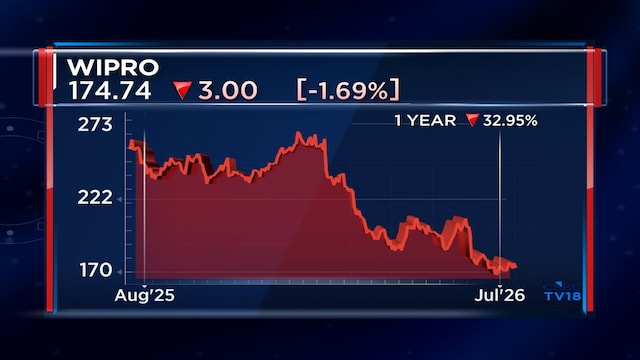
Wipro’s current market capitalization is ₹1,71,386.71 crore.
Watch accompanying video for more

Follow our live blog for more updates on Q1 results