



Ever shopped for a laptop?
At first, you compare processors. RAM. Graphics cards. Benchmark scores. Every specification seems important.
Half an hour later, you’re looking at something completely different.
Price.
Because once every laptop is powerful enough for what you actually need, the question changes. It stops being, “Which one is the absolute best?” and becomes, “Which one gives me almost the same performance for a lot less money?”
That feels like where artificial intelligence arrived this week.

For the past two years, the industry’s biggest companies competed by boasting about who had built the smartest model. This week, Google—one of the pioneers of that race—started talking about something much less glamorous: how much money customers could save.
The company unveiled three cheaper Gemini models aimed at businesses and claimed that moving workloads to Gemini could save enterprises more than $1 billion a year. At the same time, its flagship Gemini 3.5 Pro model was delayed again, reportedly because it hadn’t yet met Google’s own performance targets.
However as per Bloomberg a Google spokesperson said in a statement, “We’re shipping quickly across a wide range of models while keeping them highly cost-effective for customers.”
Think about what that says.
The company that helped turn AI benchmarks into headline news suddenly wanted the conversation to be about the electricity bill. That’s a much bigger shift than another model launch.
Because if Google is competing on price, chances are the rest of the industry won’t have much choice.
It also helps explain something happening thousands of miles away.
Last weekend, China hosted the World AI Conference in Shanghai. The photographs focused on robots cooking, playing table tennis and directing traffic outside the venue. Chinese President Xi Jinping attended for the first time in the event’s nine-year history, using the occasion to call for greater international cooperation on AI.
The robots made for great photographs.
The more important announcement happened inside the data centres.
Just before the conference opened, Beijing-based Moonshot AI released Kimi K3. Independent benchmarks suggest it now sits remarkably close to the world’s best AI models.
The surprising part wasn’t how good it was.
It was that anyone could download it for free.
Alibaba followed with Qwen3.8 Max, making much the same proposition: frontier-level AI without a frontier-level price tag.
China’s message wasn’t simply that its AI was getting smarter. It was that world-class AI shouldn’t necessarily come with a world-class price tag.
And that points to a much bigger shift.
China increasingly appears to be testing a different theory of how AI companies win. If artificial intelligence eventually becomes a utility, the winner may not be the company with the smartest model. It may be the one that gets its models into the most hands.
DeepSeek founder Liang Wenfeng, according to remarks that surfaced this week, reportedly believes the company’s best models should remain open-source and priced largely to recover hardware costs rather than maximize profit.
FILE PHOTO: Reuters
He said that the company is likely to keep its most advanced AI models open-source, arguing that open-source development and commercial monetization are not mutually exclusive.
That’s not charity.
It’s a strategy.
The more developers build on your technology, the harder it becomes for them to leave.
We’ve seen this playbook before.
Android wasn’t the first smartphone operating system. Linux wasn’t the first operating system. Google wasn’t the first search engine.
Their biggest advantage wasn’t always that they were dramatically better.
It was that they became the platforms everyone else built upon.
Of course, openness has its limits.
While Xi Jinping spoke about global cooperation, reports suggest Chinese officials are also considering restricting overseas access to some of the country’s most advanced AI models.
That may sound contradictory, but it’s not especially different from the United States restricting China’s access to advanced AI chips over the past two years.
When technologies become strategically important, every country seems to discover that openness has boundaries.
Meanwhile, the economics of building frontier AI are becoming harder to ignore.
Alphabet reported its first-ever quarterly cash burn, even as Google Cloud continued growing at a remarkable pace. The company also raised its spending plans for next year by another $15 billion.
Investors weren’t entirely convinced.
Several major technology stocks fell as markets began asking a fairly simple question:
How much is too much to spend chasing smarter AI?
That question may become increasingly uncomfortable for Silicon Valley.
OpenAI is reportedly preparing for a public listing. Anthropic is expected to follow. Together, they’re asking investors to believe that spending hundreds of billions of dollars on computing power today will generate extraordinary profits tomorrow.
China seems to be asking a different question altogether.
What if AI follows the same path as the internet, smartphones and cloud computing?
What if the biggest winner isn’t the company with the smartest technology, but the one that becomes everyone’s default platform?
Charging less isn’t necessarily about making less money.
It may be about making your ecosystem impossible to ignore.
That’s a very different path to winning.
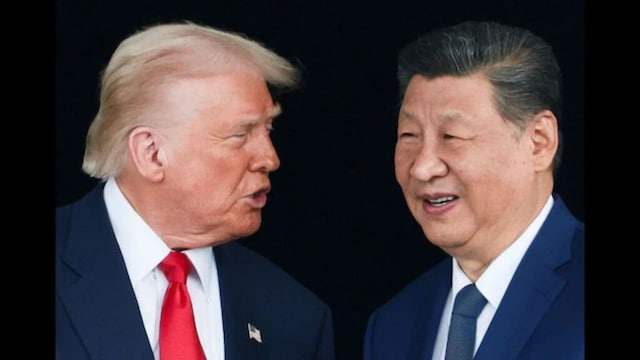
The geopolitical rivalry is evolving just as quickly. The United States and China are expected to hold formal AI talks later this year, even as both governments continue treating artificial intelligence as a matter of national strategy.
Competition isn’t going away.
It’s simply shifting.
Which brings us back to where we started.
For two years, we’ve assumed the AI race would be won by whoever built the smartest model.
This week suggested something else.
When Google—the company that helped define the race—starts talking about cost savings before benchmark scores, it’s worth paying attention.
Because history suggests technology markets often reach a point where performance becomes “good enough.”
That’s when price starts deciding the winners.
Artificial intelligence may have just reached that moment.
Happy Reading, and Stay Ahead of the Curve!