

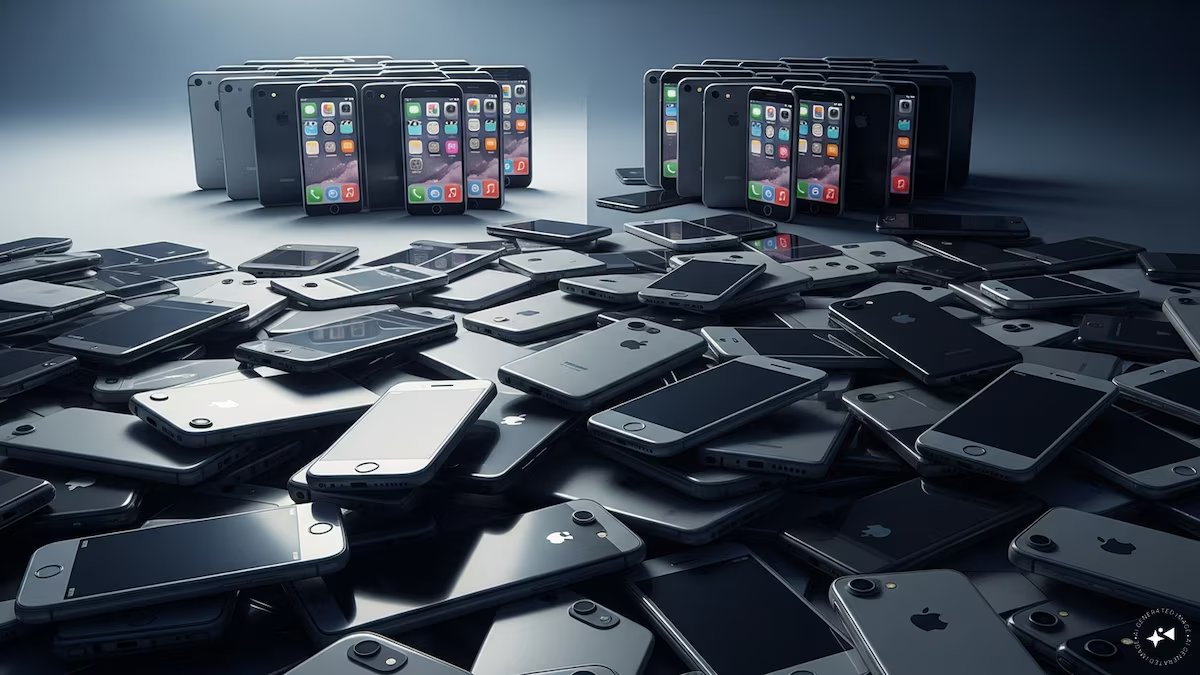
While Apple’s iPhone shipments in India slipped 3% year-on-year, the overall smartphone market contracted a much steeper 10%, according to Counterpoint Research.
Also Read: India surpasses China as top exporter of smartphones to US; apple drives shift
The gap reflects where the slowdown was concentrated. Affordability pressures hit budget smartphone buyers far harder than premium consumers, with shipments of devices priced below ₹15,000 plunging 45% from a year earlier even as demand for high-end smartphones remained comparatively resilient.
The divergence offers a glimpse into how rising handset prices and financing options are reshaping buying behavior in one of the world’s largest smartphone markets.
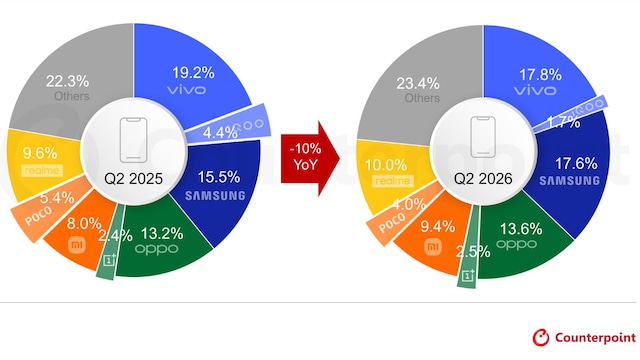
India’s smartphone market volume share by brand in Q2 2026 vs Q2 2025
Why are affordable smartphones taking the biggest hit?
Counterpoint says affordability has emerged as the biggest challenge for the industry.
The research firm attributed the sharp decline in the sub-₹15,000 segment to repeated handset price increases, rising component costs and weak discretionary spending, which prompted many consumers to delay replacing their devices.
Also Read: Indian users want flagship features in smaller smartphones, survey finds
“The market remained under pressure as both demand and supply were adversely affected,” Counterpoint Senior Research Analyst Prachir Singh said. Counterpoint said repeated price revisions pushed average smartphone selling prices up by about 15% by the end of the June quarter.
Research Director Tarun Pathak said smartphone memory prices have increased nearly fourfold since September 2025 and are expected to rise further in the coming months, forcing manufacturers to absorb or pass on higher costs.
Several brands also expanded their 4G portfolios alongside 5G models to offer lower-priced alternatives for cost-conscious buyers.
Why did premium smartphones fare better?
The premium segment faced the same economic environment but benefited from easier financing.
According to Counterpoint, more than half of smartphones sold through India’s mainline retail channels during the quarter were purchased through equated monthly installments (EMIs) or financing offered by non-banking financial companies, reducing the upfront cost of expensive devices.
Also Read: Why the ₹15,000 smartphone is disappearing
That helped premium demand remain relatively resilient even as the broader market weakened.
The data does not suggest consumers moved from affordable phones to premium ones.
Instead, it indicates that buyers in the entry-level segment were more likely to postpone purchases, while consumers already considering premium smartphones continued buying with the support of financing.
Where does Apple fit into the story?
Apple’s performance illustrates the difference between demand and shipments.
The iPhone maker’s shipments in India fell 3% year-on-year during the April-June quarter, ending four consecutive years of June-quarter shipment growth, according to Counterpoint.
However, the research firm attributed the decline primarily to inventory shortages across both online and offline retail channels rather than weak demand. It said consumer demand for Apple’s latest iPhone lineup remained healthy despite supply constraints, helping explain why Apple’s decline was much smaller than the overall market’s 10% contraction.
Which brands gained and which lost?
Vivo retained its position as India’s largest smartphone brand despite reporting lower shipments during the quarter.
Samsung was the only company among India’s top five smartphone vendors to post year-on-year shipment growth, with shipments rising 2% on demand for its Galaxy A-series and flagship devices.
Oppo, Xiaomi and Realme all recorded shipment declines as affordability pressures weighed on demand in their core mass-market portfolios.
Among emerging brands, Nothing posted the fastest shipment growth at 105%, while Google’s Pixel grew 68%, reflecting continued momentum in the premium Android segment.
What happens next?
Counterpoint expects affordability to remain the industry’s biggest challenge through the rest of 2026 as elevated component costs continue to keep handset prices high.
The research firm expects smartphone brands to focus on financing, portfolio optimization and premium offerings while forecasting India’s smartphone shipments to decline 13% for the full year.