


Now, scientists from all over the world are searching for an alternative way in which computing is achieved through the use of photons instead of electrons. With the help of optical computing, researchers are confident that the next-generation computers will be much more powerful, less energy-consuming and able to support AI systems that the current hardware cannot cope with.
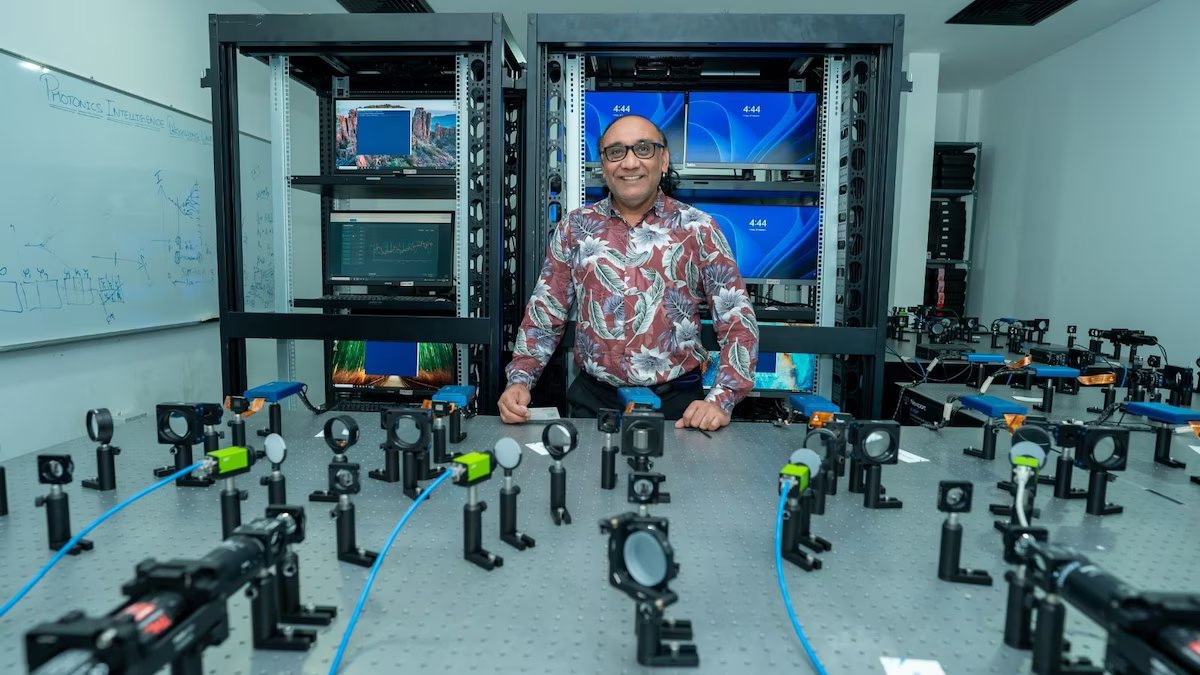
One of the researchers investigating this new direction is Pramod Kumar, PhD (Laser Technology), Director of Research and Innovation at QuantLase Research & Development Center (QRDC), Abu Dhabi.
When Physics Meets Computing
The present electronic chips are based on the technology of electrons moving within micro-circuits. Despite the fact that this technology enabled numerous breakthroughs in science, it causes overheating, consumes much energy and cannot meet the growing requirements of artificial intelligence.
As for photonic computing, it operates using another principle – it uses light to transmit and process information. The advantage of such a system is its speed of operation (speed of light) and its low level of heating; hence, photonic computing is capable of processing larger amounts of data compared to electronic systems.
According to Dr Pramod Kumar, the future of computing should not imply replacing one technology with the other but rather a combination of both in order to improve the current state in the sphere of artificial intelligence.
“The future of computing lies in harnessing physics itself to use light as both a data carrier and information processor. Photonic intelligence will help address challenges of energy consumption and data transmission, which become more pressing in modern AI,” says Dr Kumar.
Beyond Artificial Intelligence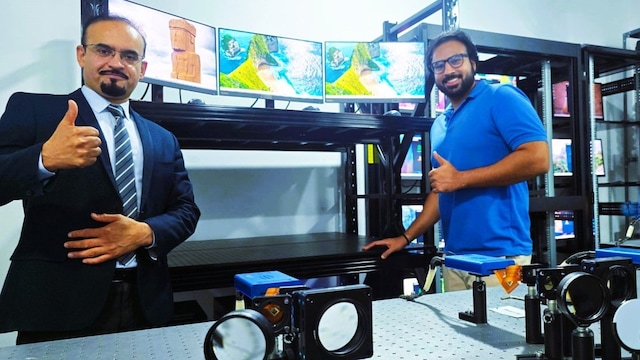
Although AI has become one of the hallmark technologies of our current decade, scientists and experts are now of the opinion that the next innovation can only come through advancements in computer hardware and not just software.
The Photonic Intelligence Processing Unit (PIPU) at QRDC was conceived precisely for this purpose – to augment the traditional GPU architecture and not to replace it. This technology seeks to solve one of the greatest problems facing AI – the considerable amount of time and energy involved in transferring data from the memory to the processors.
This technology, if adopted on a large scale, will help enhance the performance of applications like:
- AI systems
- medical research
- simulations
- financial modeling
- weather prediction
- Autonomous systems
Unlike merely increasing the speed of computers, photonics processing can greatly decrease the amount of energy consumed by next-gen AI technology.
From Healthcare Innovation to Physics-Native Computing
The scientific quest that culminated in this research originated from healthcare.
In the course of the COVID-19 crisis, Dr Kumar came up with DPI (Laser Diffractive Phase Interferometry) as a tool for fast screenings in the UAE. In this case, modern science of lasers allowed addressing a real problem in the field of public health through creation of a new diagnostic technology.
Later, this discovery served as a starting point of more wide studies concerning photonic integrated circuits and photonic computing.
Now, the research scope covers not only diagnostics but also so-called physics native computing (according to the definition of the QRDC).
Turning Research into Commercial Technology
In order to have maximum impact on the field, inventions require transition from lab to application.
It has become possible due to the efforts made by Dr Salman Abdullah, Head of Product Development and a former designer of photonic chips at Lumentum Technology, whose contribution proved to be crucial during the development and manufacturing of photonic chips by the company.
The team managed to conduct industrial foundry qualification and is moving ahead in terms of photonic chip manufacturing and hardware integration.
According to Dr Salman Abdullah:
“Sure, it is not just about creating a photonic processor, but also developing those technologies that will allow integration into a computer system and actually have an impact. Scalability has to be considered at the scientific stage.”
Why Governments and Industry Are Paying Attention
Across the globe, there is an enormous investment in quantum technologies, semiconductor advancements, and computing systems of the future.
Photonic Intelligence lies at the crossroads of the three.
Application possibilities range well outside of AI and include the following:
- energy-efficient data centers
- secure communication
- quantum safe cyber security
- medical diagnostic systems
- space technology
- intelligent manufacturing
- science supercomputing
With the growth of digital infrastructure becoming ever more widespread, saving energy while boosting computational power is now a key strategy for governments and businesses alike.
Strengthening the Future of Cybersecurity
Another critical field of QRDC’s scientific studies is Quantum Random Number Generator (QRNG) and Quantum Key Distribution (QKD).
With the development of quantum computers, most of the current encryption techniques will soon be vulnerable. QRNG and QKD are based on quantum physical processes that allow for developing absolutely secure techniques of key generation and data protection.
Even though these techniques are still being developed all over the world, they are gradually seen as essential parts of the future cybersecurity systems.
The Next Scientific Frontier
One of the trends in photonic intelligence is just one of the many transformations that are taking place in the field of science and engineering at the moment. Rather than continuing to improve the software in question, there is now a possibility of a revolutionary change in the physics behind computing technology.
While the achievements of scientists such as Dr Pramod Kumar and the QRDC group are recognized by international organizations with various honors and accolades, the true importance of their contribution to science lies in their technological accomplishments.
With the evolution of AI moving forward even further, the greatest breakthrough could very well come from the creation of an alternative computational mechanism based on the use of light.