

Ever gone for a routine health check-up expecting everything to be fine…

Ai Generated
…only for your doctor to pause over one number?
You feel perfectly healthy. You’re sleeping well. Going to work every day. Nothing seems out of place.
Then the doctor says, “Your cholesterol is a little high.”
It’s not a crisis. You’re not sick. But you’re also not being told everything is fine.
What the doctor is really saying is this: your body is changing in ways today’s symptoms don’t fully reveal.
That’s a bit like India’s IT industry this week.
The quarterly report card looked reassuring. Several companies beat expectations. TCS, HCLTech, LTIMindtree and Tech Mahindra all delivered numbers that calmed investors after a bruising first half of the year.
The Nifty IT index, which had fallen 31% before hitting a 52-week low on July 1, has since rallied about 12%, comfortably outperforming the broader market, with several large-cap IT stocks climbing 14-20% from their lows.
At almost the same time, Crisil Ratings published a note that sounded less like an earnings review and more like a doctor’s warning.
The agency isn’t saying India’s IT industry is unwell today. It’s saying the business model that kept it healthy for three decades may be beginning to change.
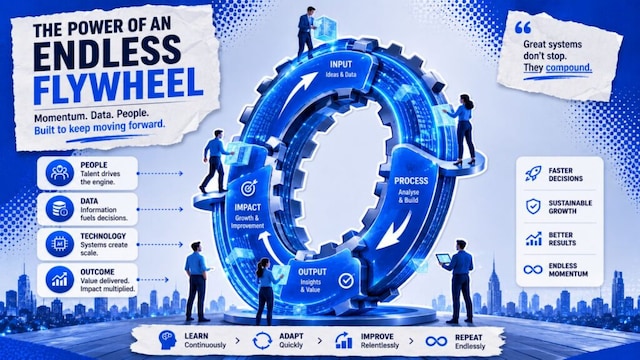
For years, the industry ran on a remarkably simple formula.
Hire more engineers.
Deliver more work.
Earn more revenue.
Use that revenue to hire even more engineers.
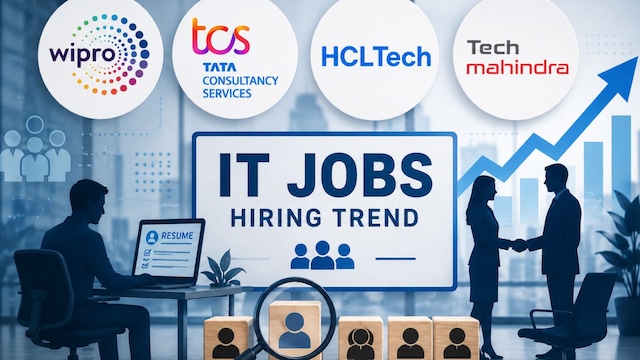
IT sector hiring trend
It was a flywheel that transformed India’s economy. Millions of careers were built on it. Entire cities grew around it. As recently as FY22, the industry was expanding at nearly 20% a year.
Crisil believes AI is beginning to change that equation. Not because companies suddenly have fewer customers. Not because technology spending has disappeared.
But because clients are starting to ask a different question.
If AI can do part of this work, why am I paying the same price for it?
That’s a very different conversation from asking whether AI can write code.
It’s a conversation about economics.
Think about a traditional IT outsourcing project. The client hired hundreds, sometimes thousands, of engineers to build, test and maintain the software over several years. Much of the bill reflected the amount of human effort involved.
Now imagine software can complete part of that work in a fraction of the time. The client still wants the project. They just don’t necessarily want to pay yesterday’s price for it.
That’s what Crisil says is beginning to show up in the industry: pricing pressure, contract renegotiations and slower deal execution as customers rethink what they’re actually paying humans to do.
In other words, AI isn’t just helping IT companies work faster.
It’s beginning to change what the work itself is worth.
Which brings us back to those earnings.
The market wasn’t irrational for cheering them.
TCS kicked off the season with profits and revenue ahead of expectations, while AI-related deals continued to grow at a healthy pace. HCLTech delivered one of its strongest quarters in recent memory, with profit rising more than 20%, Advanced AI revenue jumping 62% and first-quarter bookings reaching a record high. LTIMindtree credited its own AI strategy for strong deal wins, while Tech Mahindra’s results were strong enough to prompt several brokerages to raise their price targets.
Those are good numbers. The rally reflects that.
But they don’t necessarily answer the question Crisil is asking.
The ratings agency isn’t trying to predict whether companies will have a good quarter. It’s asking whether the economics of the industry itself are beginning to shift.
Sometimes those are two very different conversations.
For now, the industry still has some buffers. A weaker rupee is expected to support revenues and help operating margins stay around 22-23% this fiscal. But currencies don’t stay favorable forever. As that support fades, companies may find themselves balancing rising AI investments, wage costs and increasingly difficult pricing negotiations at the same time.
Interestingly, Crisil believes some of the industry’s mid-sized players could adapt faster than the giants. They don’t have the same scale, but they often have something equally valuable during periods of disruption: the ability to change direction quickly. Even then, the agency expects the broader slowdown to eventually catch up with them as well.
Perhaps the most important part of the report isn’t about revenues or margins at all.
It’s about hiring.
For decades, India’s IT boom became one of the country’s greatest middle-class success stories. An offer letter from TCS, Infosys, Wipro or HCLTech wasn’t simply a first job. For many families, it was financial security, social mobility and years of sacrifice finally paying off.
Crisil now expects net hiring to remain muted over the next two years as companies lean more on automation, higher utilization of existing employees and selective hiring for AI skills instead of simply recruiting more graduates.
Yet even here, the picture isn’t black and white.
TCS surprised many this quarter by adding employees at its fastest sequential pace in nearly four years, even though its overall workforce remains smaller than it was a year ago. At the same time, debate around AI-led layoffs has grown louder, with one former technology CEO publicly arguing this week that “this has to stop.”
The transition, in other words, isn’t likely to be neat. Companies will still hire.
The question is whether they’ll hire in the same way they always have.
Zoom out further, and the same questions are now being asked around the world. More than 200 economists and AI researchers—including 16 Nobel laureates—signed an open letter this week urging governments to prepare for AI’s economic impact, calling the shift potentially bigger than the Industrial Revolution. South Korea announced an $880-billion, decade-long investment in AI infrastructure and semiconductor manufacturing, while the United Nations continued global discussions on how countries should govern AI as its economic influence grows.
The debate has clearly moved beyond whether AI works.
The world is now trying to understand what AI does to the industries that helped build the modern economy.
India’s IT sector may be among the first to answer that question.
We’ll know a little more next week.
Infosys reports earnings on Thursday.
Its numbers may tell us whether July’s rally has further to run.
Its guidance may tell us something even more important.
Whether India’s biggest IT companies believe the industry’s underlying health is changing too.
Because one reassuring health check doesn’t settle the question your doctor is asking.
The next few quarters may not just tell us how India’s IT companies are performing.
They may tell us whether the business model that built one of India’s greatest economic success stories is quietly entering a new phase.
Happy Reading, and Stay Ahead of the Curve!