

But as AI agents become more autonomous and perform increasingly complex tasks, some technology companies believe computing may begin moving closer to the user.
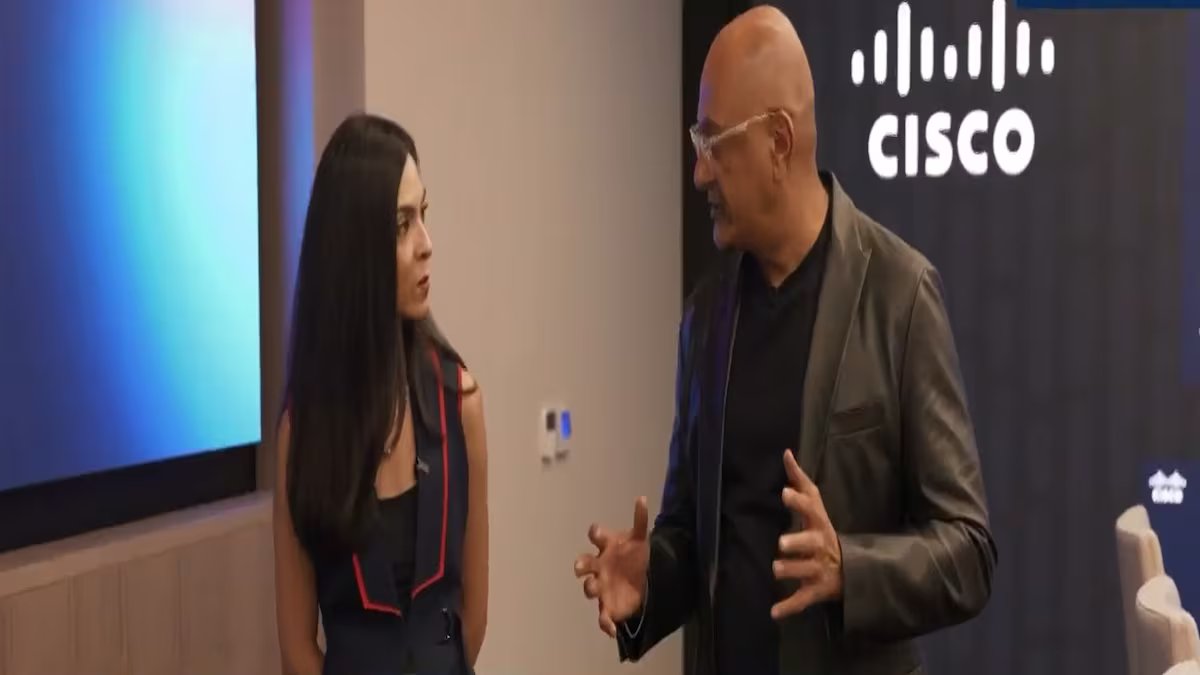
Cisco President Jeetu Patel describes this emerging model as “desk-side computing” — a setup in which dedicated AI machines sitting next to users work alongside cloud infrastructure to handle AI workloads.
What is desk-side computing?
Desk-side computing refers to the idea of having a separate AI-focused machine located close to the user rather than relying entirely on remote cloud servers.
These devices could range from compact computers such as Apple’s Mac Mini and Mac Studio to specialized systems powered by Nvidia or AMD chips. They would continuously run AI models and agents, acting almost like a personal AI workforce.
While “desk-side computing” is not an industry-standard term, the concept reflects a broader shift toward edge AI and local inference, where some AI workloads are processed closer to the user instead of entirely in the cloud.
Why are AI agents creating new computing demands?
Traditional computing was designed around humans, who generate requests intermittently.
AI agents behave differently. They can continuously reason, search for information, interact with models and execute tasks without needing breaks. Multiple agents may operate simultaneously, creating persistent workloads and generating far more network traffic than a human user.
According to Patel, as AI agents become more capable, they will constantly exchange information and update their memory, placing greater demands on processors, storage and networking infrastructure.
That could require significantly more computing power than today’s personal computers are designed to deliver.
Why might some AI workloads move closer to users?
Cloud infrastructure is unlikely to disappear. Large language models and complex AI training will continue to rely on massive data centers.
However, some tasks may increasingly be handled locally.
Processing AI workloads closer to users can reduce latency, improve response times and provide dedicated computing resources without relying entirely on remote servers. Local processing could also help reduce cloud costs and improve privacy for certain applications.
Rather than replacing the cloud, desk-side computing points towards a hybrid model in which workloads are distributed between data centers and local devices.
Why does this matter for networking?
The shift could have implications far beyond personal computers.
If workers are supported by dozens or even hundreds of AI agents operating continuously, demand for network bandwidth, processing power and energy could rise sharply.
Companies may need to redesign workplace infrastructure to support this new pattern of computing. Faster networks, more advanced chips and improved data movement could become increasingly important.
For Cisco, which supplies networking equipment and infrastructure, that creates a potentially significant long-term opportunity.
Why does Cisco see desk-side computing as the next phase of AI?
Patel believes AI agents will eventually become digital collaborators that handle research, coding, analysis and administrative tasks while humans focus on supervision and decision-making.
In that world, a single person could potentially manage numerous AI agents simultaneously. Supporting such workloads may require dedicated AI machines operating alongside traditional PCs and cloud services.
If that vision materialises, the personal computer could evolve from a device used by one person into a platform managing an entire team of AI workers.
What could prevent this shift?
The idea remains largely a vision rather than an established industry standard.
Dedicated AI hardware could be expensive, consume more power and add complexity to enterprise IT systems. Many workloads may continue to be more efficient in the cloud, and companies may prefer hybrid architectures rather than fully decentralized computing.
Still, as AI agents become more autonomous and computationally intensive, the balance between cloud computing and local processing could begin to change.
That is why Patel believes desk-side computing could represent the next major shift in the evolution of AI.
Watch the full conversation here