


But what fuels this digital revolution? It’s India’s robust Digital Public Infrastructure (DPI). As India accelerates its digital transformation journey, DPI is emerging as a critical enabler of inclusive growth, innovation, and governance at scale.
To foster dialogue on the future of Digital India, Protean presents CNBC-TV18 India DPI Summit | Reimagining Digital Public Infrastructure for a Future-Ready Bharat. This flagship initiative brought together distinguished policymakers, regulators, technology leaders, and institutions to discuss the next phase of India’s digital ecosystem and its role in shaping global digital leadership.
Through insightful discussions and collaborative dialogues, dignitaries explored how India’s pioneering digital frameworks are driving financial inclusion, improving public service delivery and creating scalable models for the world.
The silent force behind India’s world-class DPI revolution is Protean eGov Technologies Ltd. For over three decades, Protean has been developing, strengthening, and scaling critical components of India’s digital infrastructure, enabling key systems like PAN services, pensions infrastructure, Aadhaar authentication, eKYC solutions, and more.
DPI is Shaping the Future of India’s Digital Economy
The grand summit commenced with Shailesh Haribhakti, Chairman, Protean eGov Technologies Ltd, highlighting Protean’s role in enabling India’s Digital Public Infrastructure journey and shaping conversations around India’s growth and global digital leadership. He rightly said, “Digital Public Infrastructure is not just a technology story; it is a nation-building story.” He further added, “Infrastructure is not only roads, ports, bridges, and power lines; it is payments, data, and consent.”
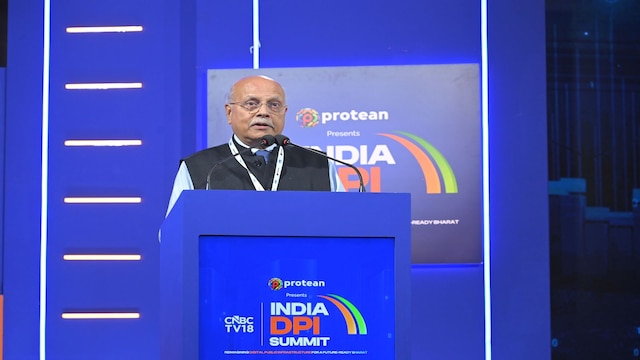
Shailesh Haribhakti, Chairman, Protean eGov Technologies Ltd
Sivasubramanian Ramann, Chairperson, PFRDA shared valuable insights on the transformative role of DPI in strengthening pension systems, advancing financial inclusion and building a future-ready Bharat. According to him, “Technology enables access to pension services, enhances financial literacy, supports informed financial decision-making and encourages long-term retirement planning.”
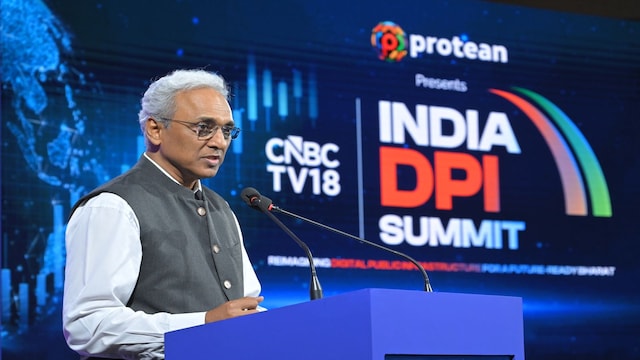
Sivasubramanian Raman, Chairperson, PFRDA
Transformative Potential of Artificial Intelligence
The discussions then moved to a thought-provoking session focusing on how AI can empower the next billion users and strengthen the delivery of public goods.
Deep tech and AI have the potential to further strengthen DPI, enhancing trust, inclusion and accessibility while creating meaningful societal impact at scale. But that is possible only when technology, policy and purpose work together.
Emphasizing the government’s role in building trusted public digital rails powered by Sovereign AI, Cloud, and Blockchain to enable private sector innovation, Rakesh Dosi, Chief Business and Product Officer, Protean eGov Technologies Ltd., said, “AI needs strong digital foundations to succeed. And government initiatives have helped build trusted guardrails for AI adoption. From regulations to enablement, the government’s role in AI has been critical.”
The UP Model: Turning Digital Transformation into Growth
As India accelerates its digital transformation journey, Uttar Pradesh is emerging as a key contributor by building robust digital infrastructure and leveraging technology to drive inclusive growth. From expanding broadband connectivity to advancing AI adoption, the state is laying the foundation for a digitally empowered economy.
Speaking about UP’s digital transformation, Sunil Kumar Sharma, Cabinet Minister, Electronics and Information Technology, Government of UP, said, “Uttar Pradesh is leveraging digital infrastructure to drive inclusive growth. Through Project GANGA, we aim to deliver high-speed broadband connectivity across the state, while our focus on trusted, interoperable digital systems is making governance more efficient and citizen-centric. With our AI Mission and AI Pragya initiative, we are fostering AI adoption and preparing a Future-ready workforce equipped with AI skills, positioning UP as a leader in India’s digital economy.”

Sunil Kumar Sharma, Cabinet Minister, Electronics and Information Technology, Government of UP
AI and DPI are Driving the Next Phase of Innovation
DPI has been one of India’s most transformative reforms in over a decade. Platforms such as UPI have revolutionized service delivery and governance by making digital transactions accessible, affordable, and seamless for the masses.
Talking about the intersection of AI and DPI, S. Krishnan, IAS, Secretary, MeitY, shared his perspective on what it truly takes to institutionalise India’s digital governance blueprint. According to him, “AI is already boosting DPI through voice-first interfaces like Bhashini, making digital services more inclusive and accessible to every citizen regardless of language.” He also showed confidence in AI’s capabilities to derive greater value from data-driven intelligence, enabling smarter governance, better decision-making, and more personalized public services.
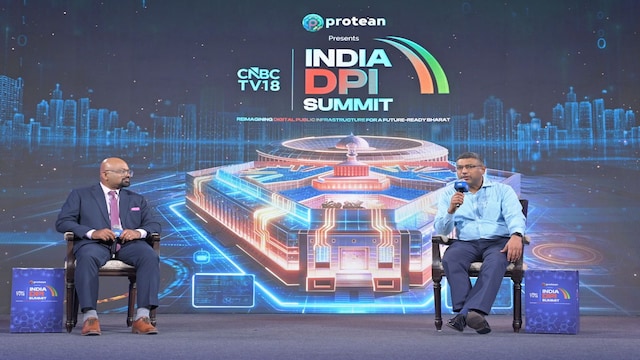
S. Krishnan, IAS, Secretary, MeitY
Amitabh Nag, CEO, Digital India Bhashini, highlighted that the AI-powered language translation platform Bhashini is bridging India’s language divide, ensuring last-mile inclusion and empowerment and making public services more accessible.

Amitabh Nag, CEO, Digital India Bhashini
According to Ajay Rajan, MD & CEO, Protean eGov Technologies Ltd., “DPI in the true sense would mean building trust and digital sovereignty. Protean has been one of the quiet custodians of that trust for over 3 decades, and going ahead, we will help build the foundations of India’s digital future through DPI and our innovative enterprise solutions, deployed in India and globally.”
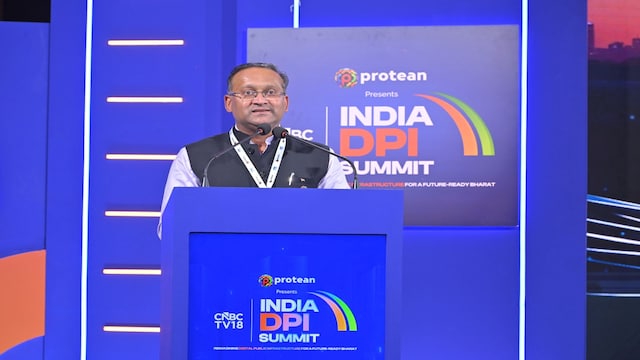
Ajay Rajan, MD & CEO, Protean eGov Technologies Ltd
Check out the event videos for more strategic insights into DPI as a national growth engine.
As the conversations at the India DPI Summit drew to a close, one message echoed across every session – Digital Public Infrastructure is no longer just an enabler of governance; it has become the foundation for innovation, inclusion and economic growth.