


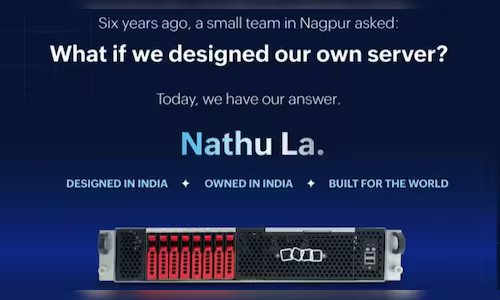
The company announced the launch through a post on X, describing the project as a major step in its effort to build more of its technology infrastructure in-house.
“We just launched something we’ve been quietly working on—Nathu La, our very own indigenously designed server, with every bit of intellectual property owned right here in India,” the post read.
It continued, “Built by our engineers in Nagpur, optimized for AI inference, and designed to power Zoho’s own applications, Nathu La is our most tangible step yet toward owning our technology stack end to end in ways that directly benefit our customers.”
We just launched something we’ve been quietly working on—Nathu La, our very own indigenously designed server, with every bit of intellectual property owned right here in India. ????
Built by our engineers in Nagpur, optimized for AI inference, and designed to power Zoho’s own… pic.twitter.com/JkvrzkG43Q
— Zoho (@Zoho) June 10, 2026
The launch marks Zoho’s first major move into hardware, expanding beyond the software products and cloud services it is best known for.
A bigger push to own the tech stack
Nathu La was developed in collaboration with Intel and runs on Intel Xeon 6 processors.
The Chennai-based company, known for products under the Zoho and ManageEngine brands, sees the server as part of a broader strategy to build more of its technology stack internally, from applications and data centers to AI models and now server infrastructure.
“Hardware is one area where we have traditionally relied on global OEMs. But infrastructure has become foundational and if compute becomes foundational, we should own it,” Ramprakash Ramamoorthy, Director of AI Research at Zoho Corp, told Moneycontrol.
The company believes owning more of the underlying infrastructure will help it optimize performance while reducing reliance on overseas server manufacturers such as Dell, Hewlett Packard Enterprise and Lenovo.
Not for sale – at least for now
Unlike traditional hardware vendors, Zoho is not planning to sell Nathu La commercially anytime soon.
“We launched a server platform primarily for internal use. We are dogfooding it as we speak. Zoho runs on Zoho,” Ramamoorthy said.
According to the Moneycontrol report, Zoho has already been testing the platform for nearly a year and has started limited production deployments.
The company currently operates more than 10,000 servers across over 16 data centers worldwide, with a few hundred Nathu La servers already deployed. Zoho expects that number to reach around 2,000 by the end of the year.
Focused on lowering AI infrastructure costs
Zoho claims Nathu La can reduce power consumption by 12-18% while lowering total cost of ownership by 20-30% compared with existing server setups.
The company believes such savings are becoming increasingly important as AI-related infrastructure expenses continue to rise.
“Infrastructure costs and inference costs are becoming one of the biggest line items for software companies,” Ramamoorthy said. “The same server configuration that we purchased six months ago now costs three to four times more.”
Built in Nagpur by fresh graduates
One of the more interesting aspects of the project is where it was developed. Work on Nathu La began in 2020 at Zoho’s Nagpur centre, away from traditional technology hubs such as Bengaluru and Chennai.
“We started with almost no experienced hardware talent available locally,” said Mangesh Sadafale, Head of Hardware Development at Zoho.
To build a talent pipeline, Zoho created its SETU (Student Engagement for Transformative Upskilling) programme, which works with engineering students from their fifth semester onwards. More than 300 students have gone through the programme, according to the report.
Today, much of the hardware team consists of engineers who joined through that initiative.
Why the Name Nathu La?
The server takes its name from the Nathu La mountain pass in the Himalayas, which connects India and China.
Zoho reportedly drew inspiration from Intel’s tradition of naming technology platforms after geographical locations and mountain passes. Since “La” itself means “pass” in Tibetan, the company chose to keep the name simply as Nathu La.