

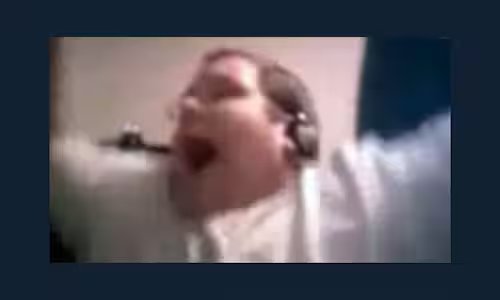
In December 2004, a 19-year-old from New Jersey sat in front of his computer and recorded himself lip-syncing to Dragostea din tei by O-Zone. The video—later dubbed the “Numa Numa Dance”—was uploaded to Newgrounds, a Flash-era platform. What followed was something the web hadn’t quite seen before. A truly global, organic viral moment.
This was pre-YouTube. Pre-influencers. Pre-everything.
Brolsma’s video traveled the only ways content could in the early 2000s—through email chains, forums, and word of mouth. No recommendation algorithms were nudging it along, no “For You” pages amplifying reach. And yet, it spread.
Also Read: Meta acquires robotics AI company to help build humanoid technology
By 2006, estimates suggested the clip had racked up hundreds of millions of views across re-uploads and mirrors. For context, this was around the time YouTube itself was just finding its feet, with its first-ever upload, ‘Me at the zoo’ by Jawed Karim.
Brolsma’s exaggerated expressions, loose-limbed dancing, and complete lack of self-consciousness turned the clip into something oddly universal. If “Numa Numa” feels familiar today, that’s because its DNA is everywhere.
Lip-syncing? It’s the backbone of platforms like TikTok. Reaction faces, exaggerated gestures, looping clips designed for replay value, these are now staples of internet culture.
Brolsma was thrust into mainstream attention, appearing on television and topping internet celebrity lists. Yet, by many accounts, the spotlight was uncomfortable. He stepped back, avoiding the kind of sustained public persona that would later become standard for viral stars.
Over the years, he has resurfaced occasionally—recreating the dance and releasing music. It’s a different kind of internet longevity, one not built on constant output but on a shared memory.
Also Read: Oscars organization expands international film eligibility, addresses AI in new rules
(Edited by : Ajay Vaishnav)