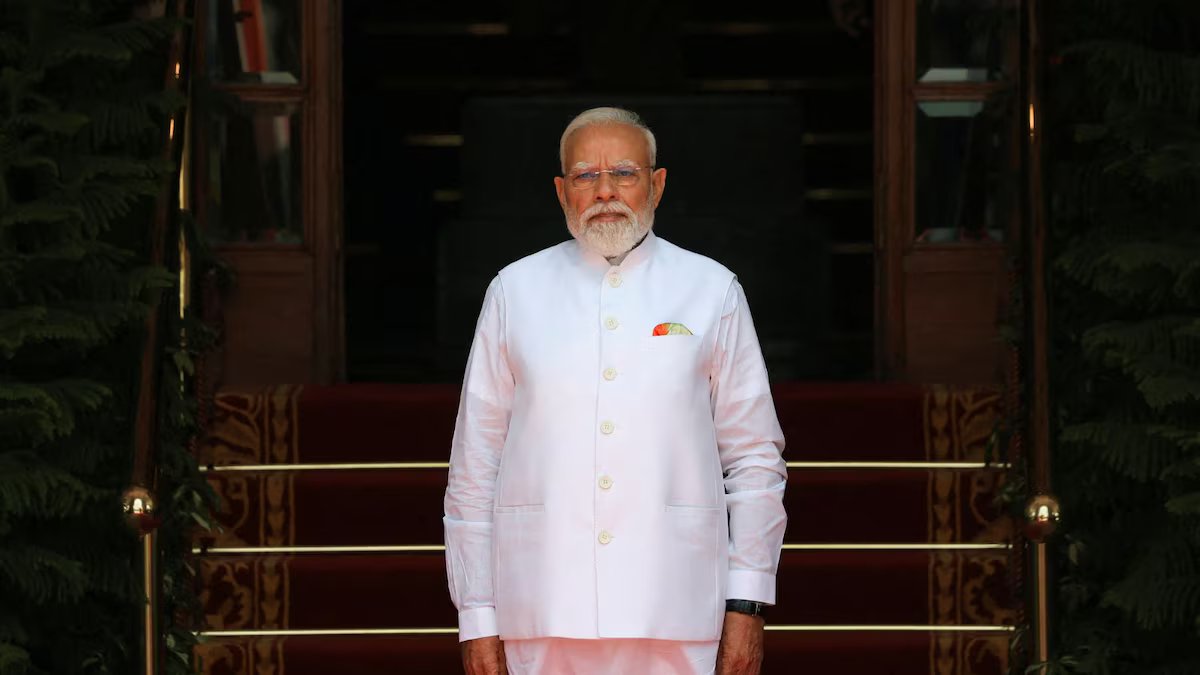



“For March, we saw a degrowth of about 25% versus our budget plans,” said VS Hariharan, Managing Director and Group CEO of Redington Group, adding that the company expects the affected business to “recover fairly fast” once the crisis eases.
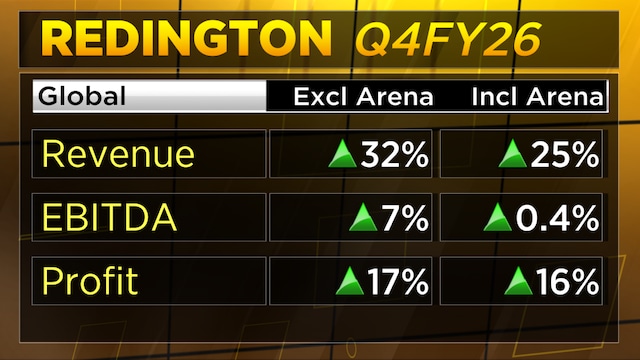
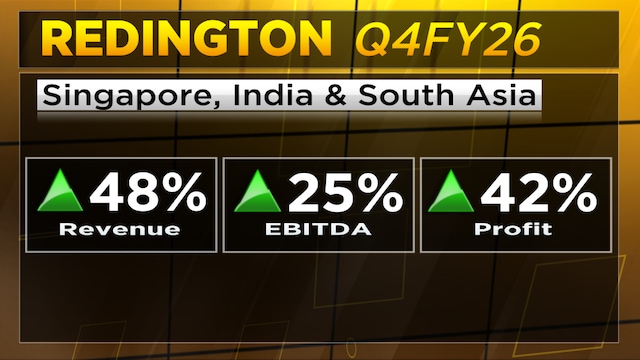
Despite the disruption, Redington reported 25% year-on-year (YoY) revenue growth in the January-March quarter of 2026 (Q4FY26), supported by strong performance in India and Gulf Cooperation Council (GCC) markets. Hariharan said India grew 50% during the quarter, while GCC and Levant markets also posted over 50% growth, helping offset weakness in the UAE business.
Watch the full conversation here or scroll for edited excerpts.

Redington is also targeting earnings before interest, taxes, depreciation and amortization (EBITDA) margins in the 2-2.2% range for 2026-27 (FY27), excluding large one-off data center projects. The company continues to remain optimistic on long-term opportunities in cloud, software and data center businesses, although Hariharan acknowledged that large data center deals carry significantly lower margins and will be evaluated selectively based on return on capital employed.
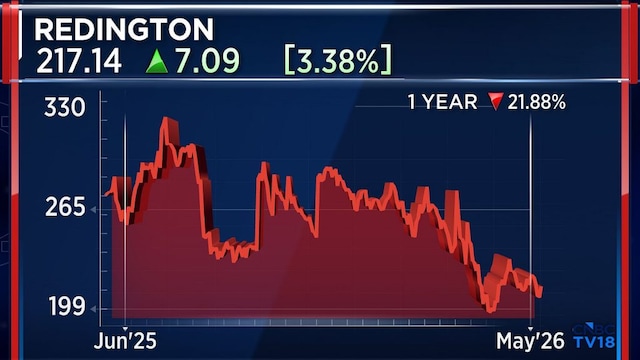
Redington Limited currently has a market capitalization of around ₹16,933 crore, while the stock has declined nearly 22% over the past year.
 This is an edited transcript of the interview.Q: You’ve mentioned the West Asia conflict had a temporary but consequential effect on operations in March. Can you quantify the revenue and EBITDA impact?
A: First, I want to clarify that the impairment was an exceptional item, similar to the exceptional item we had last year on the divestment of Paynet.
Year-on-year, both revenues and profits grew strongly for the quarter — revenues were up 25%, and profits were up 16%. This was despite the West Asia crisis, which affected mainly the UAE and, to some extent, Saudi Arabia.
For the month of March, we saw a decline of about 25% versus our budget plans. Once the crisis is over, we expect that business to recover fairly fast.
Q: How significant was that 25% shortfall in terms of revenues and margins?
A: In a typical month, the Middle East business generates about $400 million in revenue. A 25% shortfall translates to nearly a $100 million revenue impact and around a 4.5-5% gross margin impact.
The positive side was that we saw a higher mix from the Software Solutions Group, which carries better margins.
Also Read | OMCs may face prolonged stress as petrol and diesel losses widen: ICICI Securities
The hardware business was impacted more because of supply chain disruptions — we were unable to bring products in or ship them out. We also had to rely more on air freight because the Strait of Hormuz was closed.
We also faced some data center attacks, where we had to migrate customers from one Middle East data center to another. But overall, our warehouse operations and local teams responded quickly, and we expect a fairly fast recovery once the situation improves.
 Q: Has the disruption continued into April and May as well?
A: Yes, we do expect to see a 25% impact on that part of the business this quarter as well.
But Redington is a very diversified company across geographies and business units. India grew 50% last quarter, and several GCC countries, including Qatar and Kuwait, also performed strongly.
Overall, the GCC and Levant region grew 51% despite the crisis, which helped offset some of the UAE’s weakness.
Q: Costs have also increased because of the crisis. Can EBITDA margins still move above 2%?
A: Our EBITDA margin was closer to 2% in Q4.
The UAE business contributes about 15% of the overall business, and the impact there does not translate proportionately to the full company.
There were higher costs because of war-related insurance premiums and freight expenses, which had about a 0.2% impact on costs. Some of these costs will eventually be passed on to customers and partners.
The larger impact was from lower revenues, which affected gross margins. We also took some one-off provisions in Saudi Arabia because collections were slower than planned.
 Q: What is your EBITDA margin outlook for FY27?
A: Excluding one-off data center deals and large projects, we plan to maintain EBITDA margins around 2.2-2.3%.
Our goal for FY27 is to stay within the 2-2.2% range, and that is what we are working towards.
Q: What about the data center business?
A: Last year, we generated around ₹1,000-1,500 crore of revenue from data centre-related deals.
India’s data center capacity is expected to grow from 1.5 gigawatt to 7.5 gigawatt, so the opportunity pipeline remains large.
Also Read | Geosphere Capital’s Arvind Sanger skeptical on Trump-Xi deal, warns oil threatens AI rally
However, these projects carry significantly lower gross margins — sometimes less than half the normal business margins. That is why we evaluate each deal more from a return-on-capital perspective rather than purely on revenue growth.
The core business outside data centers continues to operate within the 2-2.2% EBIT margin range.
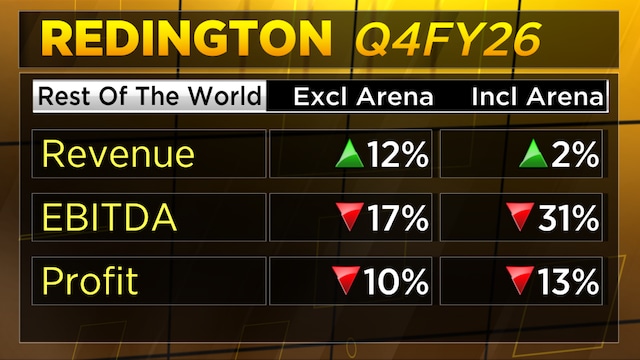 Q: The Turkish business has gone through several challenges. In hindsight, was it a bad bet?
A: We entered Turkey nearly 20 years ago, and while there have been challenges recently, we have also had strong periods.
Over the last two years, the environment became difficult because interest rates rose sharply from around 10% to over 50%, while inflation climbed to nearly 65% before moderating.
Also Read | MTAR Tech raises FY27 revenue growth guidance to 80% on strong clean energy orders
We also reduced the size of the business significantly and shifted focus towards US dollar-denominated operations instead of the local lira business because borrowing costs became too high.
We continue to see good traction in software and cloud businesses in Turkey and hope to navigate the difficult environment successfully going forward.
Catch all the latest updates from the stock market here