


According to Gaurav Malhotra, ED of Axis Capital, the biggest risk in a fast-growing platform business is losing relevance during the expansion phase. Explaining why market share matters more than short-term profits, he said, “What you don’t want to see is market share erosion.”
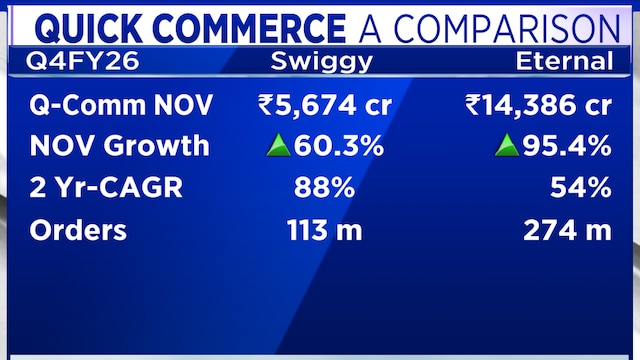
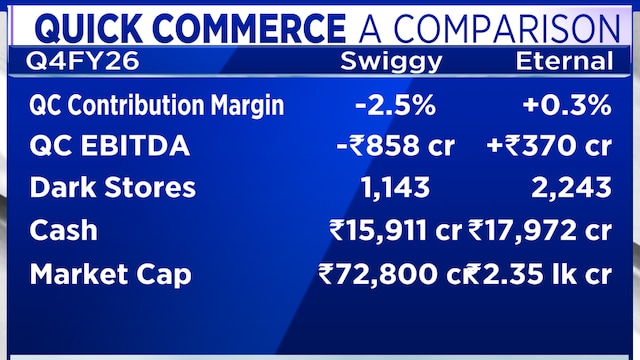
Malhotra pointed out that once a player starts losing share, regaining it later becomes significantly more expensive. He believes Eternal and Blinkit are currently trying to strike a balance between growth and profitability, while Swiggy appears to be prioritizing margins more aggressively.
Watch the full conversation here

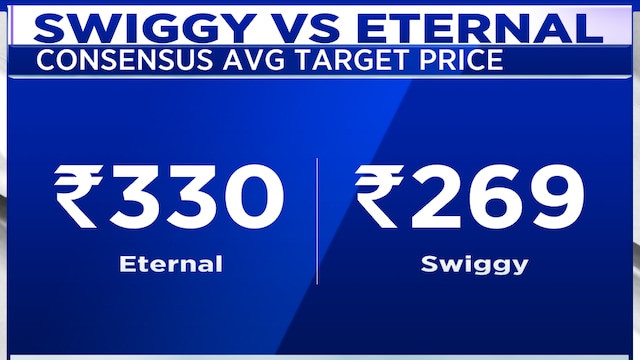
It’s because of this focus on margins that Swiggy, he said, “lost roughly around 200 bps of market share” in quick commerce during the quarter.
Also Watch | Quick commerce still chaotic, no clear winners yet: Bernstein
But the larger question is whether quick commerce itself becomes a winner-takes-all market. Lalit Bhise, Co-Founder & CEO of BIZOM, argues that the current debate often ignores the scale and adaptability of India’s offline retail ecosystem.
Bhise said quick commerce still accounts for less than 10% of India’s overall retail market, while traditional kirana stores continue to dominate consumption across the country. Challenging the narrative that neighborhood retailers are being wiped out, he said, “More than 90% is still driven by mom and pop.”
He added that kirana growth is now increasingly shifting towards rural and semi-urban India, where consumption is rising as buyers move from unbranded to packaged goods. According to him, the real transformation underway is not the disappearance of offline retail, but its digital adaptation.
Also Watch | Quick commerce’s next hurdle is gig worker security, say industry executives
Drawing parallels with the evolution of ride-hailing platforms, Bhise said India’s retail market may eventually support multiple formats and participants rather than consolidating into a pure two-player market. He cautioned against underestimating the ability of small retailers to evolve with changing consumer behaviour.
“I think it is a little bit early to call quick commerce a win,” Bhise said, adding that kiranas are already beginning to adapt to online commerce and could remain relevant even as rapid delivery platforms scale up.
Catch all the latest updates from the stock market here